


Heartworm Prevention Is So Much Better Than The Cure
by Rebecca Foxton
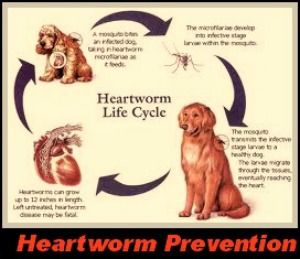
Heartworm is a particularly dangerous parasite that is spread from host to host via mosquitoes. A long thin worm known as filaris is commonly known to be found in dogs; many don't realize that they can also infect other animals such as sea lions, wolves, coyotes, ferrets, cats and shockingly, humans as well. The worm was named after its habit in the last stage of its reproductive cycle of taking up residence in heart of its host.
Without treatment, the afflicted animal will have increasing difficulty exerting itself, perhaps losing its breath or even passing out when under duress. At the end, the animal can die as a result of heart failure or failure of the kidneys, lungs or liver, as the parasites can also cause damage to these vital organs. Treatment is possible, but it is lengthy (18 months or more). It is also unpleasant for the animal, usually involving an arsenic compound or other heavy duty heartworm meds to kill the parasites, and may even require surgery. For the vast majority of the infection, you may not notice any symptoms.
The life cycle of the dog heartworm is approximately 6 to 7 months from the first bite of the mosquito to the parasite moving to the heart. Upon adulthood, the females can measure 30cm in length and the males 23cm. After 7 months, mating will have occurred and the females will have started producing microfilariae. Although heart worms used to only affect warm southern climates, they now affect anywhere which is habitable for mosquitoes.
Heartworm prevention comes in the shape of a monthly Prophylactic, such as Heartgard which uses ivermectin - a broad range anti parasite medication. Heart Guard heartworm medicine is inexpensive, easy to dispense and very effective.
Milbemycin, which is the active ingredient in the heartworm treatment Interceptor, and moxidectin, which is the active ingredient in ProHeart, are two other heartworm preventatives. Heartgard Plus is the most popular anti-heartworm medication.
It is also possible to treat for Heartworm and other parasites with the use of a topical application such as Revolution, which not only controls heartworms, but also a effective in flea and parasite control. Thankfully, heartworm prevention protection is very effective, so there is no need for your pet to be negatively affected. You can consult with your vet and get them to check your pet.
A blood test is the most common diagnostic tool, and medications can prevent and cure the infection if one is discovered. X-rays may be necessary for the vet to see the full extent of infection, should your animal test positive for heartworms. Remember, especially in the case of heartworm infections, an ounce of prevention is worth a pound of cure.
To get the information you need, ask about the canine heart worm at your dog's next routine check up. Don't risk your pet's health by trying to save money, as it will be more expensive in the long run if they do become infected. Plus your pet will be healthier if you prevent the heart worms in the first place.
We would like to thank Rebecca Foxton for this article on
Heartworm Prevention. We hope this will be a benefit to our readers.
For more related articles about dogs read these pages
To go to the article index page click here
To go to the book store index page click here.
To go to top of page on Heartworm Prevention Click Here
House Tips | Auto Tips | Sports/Hobbies | Grandma's Tips |
Wisdom & Humor |
